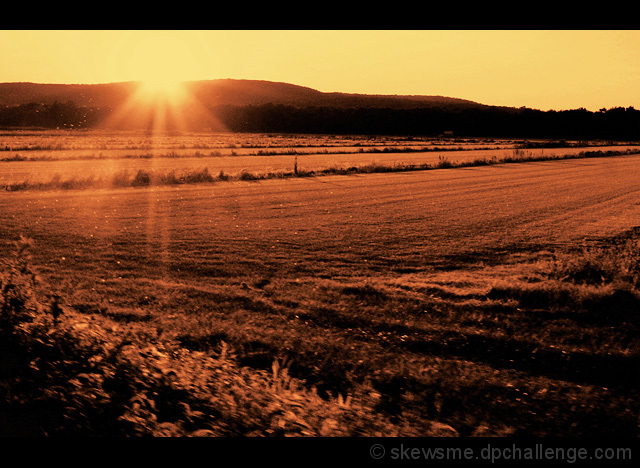
The glacial accidents of 600 million years ago produced the deep valleys and veins of decomposed organic matter that accumulated on the prehistoric lake bottom in what is now Great Meadows and Alphano. The eventual swamp was drained in the mid 1800s, converting 5,000 acres into farmland known for its rich muck soil (black dirt). Today, several farms and greenhouses there are a gardener's Nirvana. Besides producing hundreds of acres of sod, row upon row of greenhouses are filled with annuals, perennials, mulch, herbs and farm fresh seasonal produce grown in the fertile meadows.
//www.njskylands.com/fmwarren.htm
//geology.csustan.edu/club/whatisgeo.htm
Statistics
Place: 67 out of 86 Avg (all users): 5.0164 Avg (commenters): 5.8333 Avg (participants): 4.6970 Avg (non-participants): 5.0867 Views since voting: 937 Views during voting: 292 Votes: 183 Comments: 8 Favorites: 0
I'm trying to decide if this really fits the challenge, or if you just shoehorned in a landscape shot you liked. Although this field may or may not be on an ancient lake bed, it really does not scream geology to me. I do like it, however.







 Add photograph to your favorites
 Add photographer to your favorites


