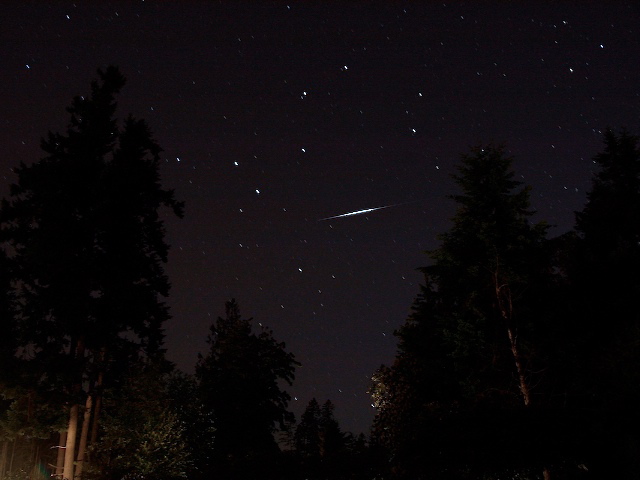
Iridium flares are streaks of light caused by reflection of sunlight from panels of the Iridium communications satellites. There are very detailed predictions of where and when these will occur so all that's left is to stake out a spot that frames the event well and get your exposure right. This one happened to occur just below an asterism that looks like a backwards question mark, this is the "head" of the constellation Leo.
Wow, my first 6+ effort and only on my fourth attempt! Thank you to all who took the time to vote, and especially those who went the extra mile with commentary. No, it's not a shooting star :) they would generally be far too faint to capture, and random. These events are highly predictable, the "gold standard" is a website, www.heavens-above.com. It has predictions for when numerous satellites will pass overhead, including the International Space Station and the Space Shuttle when it is in orbit.
Statistics
Place: 20 out of 46 Avg (all users): 6.1221 Avg (commenters): 6.8182 Avg (participants): 5.9630 Avg (non-participants): 6.1339 Views since voting: 1298 Views during voting: 697 Votes: 393 Comments: 22 Favorites: 1 (view)
Great job of catching the Iridium flare! (Heavens Above I presume for the calculation?) Some additional light painting in the trees could add even more to this, IMHO. Regardless, well done!
Think I would have preferred a bit longer an exposure to get the stars creating an arc, or a shorter exposure to keep them as points. As it is they look a bit more like a blur... the flare is good though. The trees are more an annoyance than a feature... might have tried painting them with a torch to give them some colour and bring some balance to the image.
A shame the exposure was slightly too long and blured the stars. I would have kept the shutter open for a bit longer to make the star trails a bit of a feature.






 Add photograph to your favorites
 Add photographer to your favorites


 Photographer found comment helpful.


