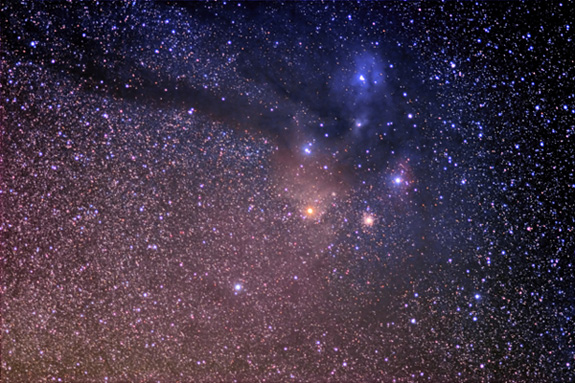
This is a single exposure of 256 seconds using a Canon 20Da and a Sigma 105mm macro lens. These were mounted piggyback on a Meade LX200 Telescope mount for tracking.
The Rho-Ophiuchus Nebula Complex is part of the Milkyway. You can find it with the naked eye by locating the star Antares.
All basic editing done with Photoshop CS2.
Statistics
Place: 49 out of 170 Avg (all users): 5.9396 Avg (commenters): 7.5833 Avg (participants): 5.9079 Avg (non-participants): 5.9475 Views since voting: 2176 Views during voting: 630 Votes: 381 Comments: 15 Favorites: 0
Dennis, I'd venture to say that fewer than 1 out of 1000 DPC users appreciate what this photo depicts and have no idea the difficulties involved in capturing the subtleties shown. Not only do you show the dust lanes leading into Sagittarius, but you've also captured the elusive nebulosities around Rho Oph. Superb work with a single exposure. From one astrophotographer to another, my hat is off. I'd love to see a link to a full size version, if you have one online.
I love these night shots. This is very crisp. I would be curious to know your ISO, etc. I have built a scotch-mount to try this myself, but haven't had the opportunity to try it out.
Astro-photography is a wonder indeed. I look forward to reading your photo notes. Thanks for helping us see the bigger picture of light. Talk about 30 seconds "or more" exposure!
Very, very nice astronomy shot. Good colors, good tracking. Might consider sharpening more to make the individual stars stand out more, especially the high density galactic plane ones on the left.
gotta love these photos. GL. One thing though, did you pick a name that is scientific termy. <---nice word right? Anyway is there a more common name for the constellation, like maybe a layman term?






 Add photograph to your favorites
 Add photographer to your favorites

 Photographer found comment helpful.


