Wow, 13 years, and your last ribbon was a photo of stars, too. Obviously you should get outside more often. I'm impressed that you dared to venture into Pixinsight's deep, muddy waters.
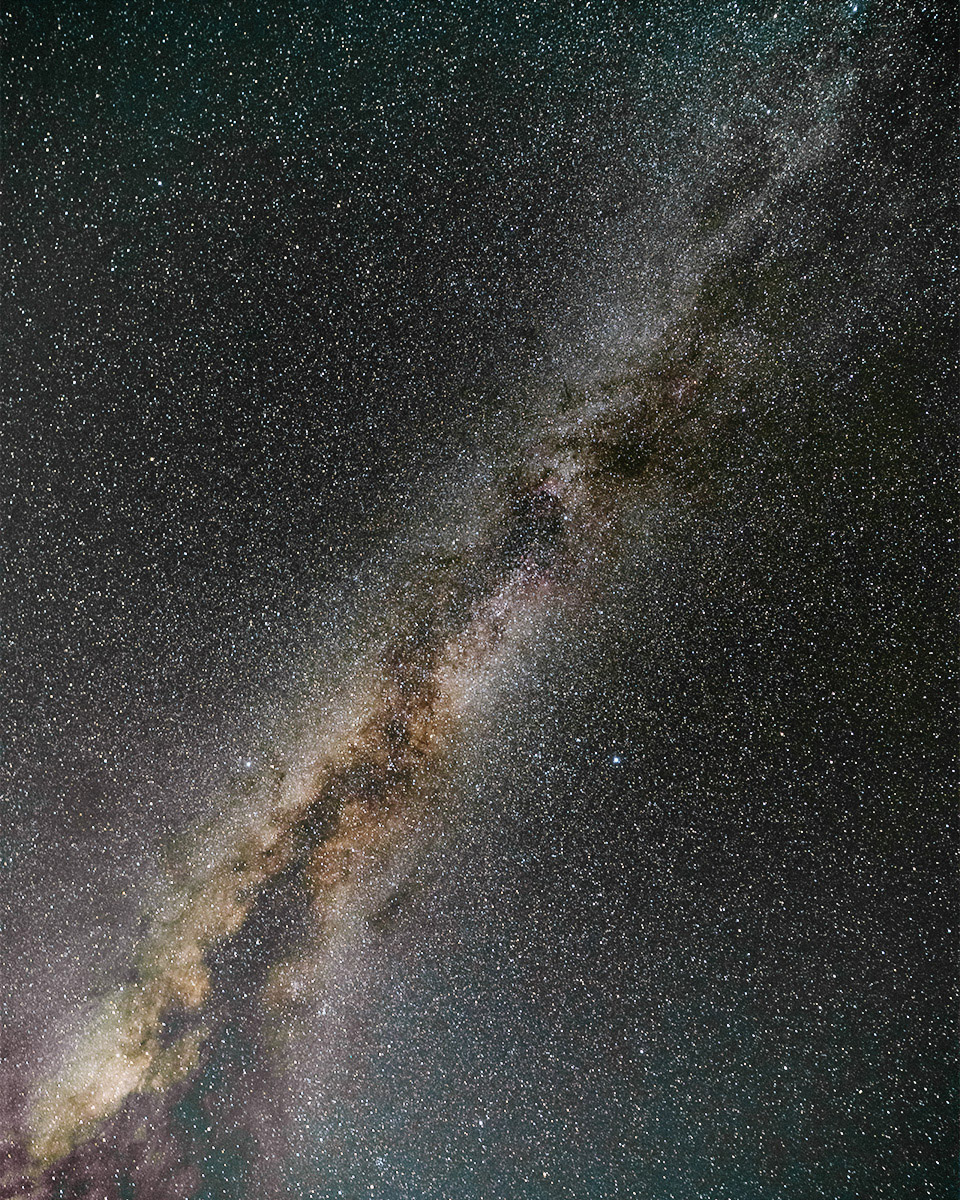
Here's a little trick you might find useful... in Photoshop, select Color Range > Highlights with a pretty big fuzziness value to catch most of the stars. Select > Modify > Expand by 4 or 5 pixels, then hide the selection. Choose Filter > Other > Minimum with a radius of about 0.4 pixels (preserve roundness), and see if that helps.
Ha, yes I do need to get out more, LOL. I finally have a UWA lens that I'm really satisfied with for astro work. Pixinsight has been "fun" to learn, the user interface can be quite daunting to the uninitiated. Thank goodness for lightvortexastronomy.com!
Wow, 13 years, and your last ribbon was a photo of stars, too. Obviously you should get outside more often. I'm impressed that you dared to venture into Pixinsight's deep, muddy waters.
Here's a little trick you might find useful... in Photoshop, select Color Range > Highlights with a pretty big fuzziness value to catch most of the stars. Select > Modify > Expand by 4 or 5 pixels, then hide the selection. Choose Filter > Other > Minimum with a radius of about 0.4 pixels (preserve roundness), and see if that helps.
The Milky way and a sky full of stars is definitely breathtaking to behold! Love the orientation that has the Milky Way cross the frame at a diagonal. Wonderful capture! My only critique is that I think the night sky looks just a tad washed out and can use a adjustment to the contrast to make it a bit darker.






 Beneath the Wonder of the Night Sky
 Add photograph to your favorites
 Add photographer to your favorites

 Photographer found comment helpful.


