Manatees do not form permanent pair bonds like some animal species. During breeding, a single female or cow, will be followed by a group of a dozen or more males or bulls, forming a mating herd. They appear to breed indiscriminately during this time; however, age experience of some males in the herd probably plays a role in breeding success. Although breeding and birth may occur at any time during the year, there appears to be a broad spring-summer calving peak.
When a female manatee goes into estrus, she is soon detected and pursued by numerous male manatees throughout the cycle (perhaps for a duration of up to three weeks). During that time, the female can mate with one or more males in what is known as an estrous or mating herd. That's why scientists generally don't know who the father of a calf is.
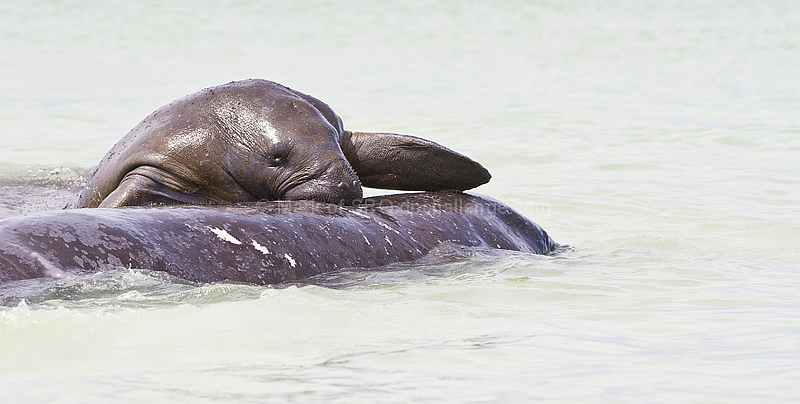
Many times, we will get phone calls at Save the Manatee Club notifying us that a group of manatees are "playing." Sometimes people also call because they are concerned that the manatees in the estrous herd are injured, stranded, or in distress. In actuality, a mating herd is sort of a free-for-all. In shallower waters, the effect can be quite dramatic with churning waters and flailing flukes and flippers.
Manatee researchers are currently taking genetic samples of manatees (the animals are not harmed). Someday they hope to be able to establish paternity, which will help in determining the genetic health of the manatee population.
Statistics
Place: 63 out of 108 Avg (all users): 5.5455 Avg (commenters): 6.2000 Avg (participants): 5.4118 Avg (non-participants): 5.6875 Views since voting: 578 Views during voting: 197 Votes: 99 Comments: 6 Favorites: 0
Good documentary photo. I would have no idea that this was a part of the mating ritual of the manatee if the title were not there. This looks like a manatee on a log and having two faces showing would have strengthened the message somewhat.







 Add photograph to your favorites
 Add photographer to your favorites


 Photographer found comment helpful.


