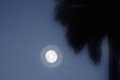
Decided on experimenting today using pinhole on my digital camera. I hammered a small aperture (about ½mm) into a steel cut out (from the lid of a beans tin) and taped it on the the camera using black tape.
Very little editing on these, so pretty much straight out the camera other than black and white conversion and a bit of level adjustment.
So I take it you guys are using a super high ISO and wide open aperture?
Actually, I keep mine on the lowest ISO, but that just means the shutter speed is longer. I haven't tried it at a higher ISO. And the pinhole is the aperture. This is totally manual, since it's a lenseless process.
I tried putting the tinplate on the end of extention tubes too, to see if i got any different effects the further away from the sensor it was.. not much good.
Cool, I also want to make one!
What kind of shutter speeds to you get? Have you tried making a smaller hole to make the images sharper?
Putting the hole further away from the sensor should get you a longer lens (more tele, greater magnification). Didn't it?
If you want to shoot architecture, you can just move the hole around to get a "shift"-type objective that renders buildings "straight". ("tilt" is not of much use with a pinhole though...)
Cool, I also want to make one!
What kind of shutter speeds to you get? Have you tried making a smaller hole to make the images sharper?
Putting the hole further away from the sensor should get you a longer lens (more tele, greater magnification). Didn't it?
If you want to shoot architecture, you can just move the hole around to get a "shift"-type objective that renders buildings "straight". ("tilt" is not of much use with a pinhole though...)
In the sun the speeds were pretty fast, around 1/20th and then around 1/4th in the shade.
I tried two different sizes and the sharpness does increase with a smaller aperture.
Can I do this with a fixed lens? There's no way to remove it. (unless I want a permanent pinhole camera)
8-D
I would say that you are pretty much out of luck with a fixed lens camera. You did give me a great idea though. I have an old Fuji A800 with the lens out of it, but everything else is still working. I was going to see if I could put a lens mount on it, however, it would be good to make up a pinhole for it. Pinholes work better with a larger sensor though, since resolution is limited by the size of the pinhole. I don't know if the broken cam idea will work though, since 4 sec is the longest exposure that it will do.
Can I do this with a fixed lens? There's no way to remove it. (unless I want a permanent pinhole camera)
8-D
I would say that you are pretty much out of luck with a fixed lens camera. You did give me a great idea though. I have an old Fuji A800 with the lens out of it, but everything else is still working. I was going to see if I could put a lens mount on it, however, it would be good to make up a pinhole for it. Pinholes work better with a larger sensor though, since resolution is limited by the size of the pinhole. I don't know if the broken cam idea will work though, since 4 sec is the longest exposure that it will do.
Hmm. Interesting. I don't have a problem doing that with the D300. Lens off, lens cap on, turned to manual and had no problem at all. Shutter speed changes readily. Of course, with no lens the aperture setting shows 0.
Originally posted by PixelKing:
So another possibly stupid question...........but
For some reason my camera will not allow me to change the shutter speed when there is no lens attached.
I have a Nikon d700. Any thoughts?
theres no "Pinhole" setting on my camera.......LOL
just throwing in an oddball here, what effects could you get by using multiple holes, say three holes arranged in a triangle, would you get a triple exposure effect or would they effectively act as one aperature three times the size?
just throwing in an oddball here, what effects could you get by using multiple holes, say three holes arranged in a triangle, would you get a triple exposure effect or would they effectively act as one aperature three times the size?
just throwing in an oddball here, what effects could you get by using multiple holes, say three holes arranged in a triangle, would you get a triple exposure effect or would they effectively act as one aperature three times the size?