I had a "Duh" moment yesterday while I was out shooting landscapes, twisting and contorting my fat butt into all sorts of positions trying to get the perspective I wanted. When I do this, I often end up with seriously tilted horizons and then lose a lot of my image area and composition choices to correcting the tilt. I finally realized I could use two of the focus points in my viewfinder as a level. Might be obvious to many, but I suspect some others like myself had not noticed the focus points could be used this way.
I had a "Duh" moment yesterday while I was out shooting landscapes, twisting and contorting my fat butt into all sorts of positions trying to get the perspective I wanted. When I do this, I often end up with seriously tilted horizons and then lose a lot of my image area and composition choices to correcting the tilt. I finally realized I could use two of the focus points in my viewfinder as a level. Might be obvious to many, but I suspect some others like myself had not noticed the focus points could be used this way.
I had a "Duh" moment yesterday while I was out shooting landscapes, twisting and contorting my fat butt into all sorts of positions trying to get the perspective I wanted. When I do this, I often end up with seriously tilted horizons and then lose a lot of my image area and composition choices to correcting the tilt. I finally realized I could use two of the focus points in my viewfinder as a level. Might be obvious to many, but I suspect some others like myself had not noticed the focus points could be used this way.
Again,... DUH.
It took me a while to figure that one out too, although I still sometimes forget.
If I had a buck for every time I had to rotate an image to compensate for shooting it off-level, I'd be a rich man, LOL. It does always seem I tend to rotate one way. Most of the time, if I concentrate on leveling it with the focus points or other references, I'm dead on, so it comes down to remembering to pay attention to it.
me I have to keep my grid on at all times...I use it alot to line things up...
Canons didn't used to HAVE that feature, though the 7D does now. I bought a replacement screen for the 5D that has a grid engraved on it. I hated living without a grid, with my 20D. As a retired architectural photographer, I'm so used to having one available.
The "line-up-on-the-focus-points works pretty well, except some of the newer models have them arrayed in an oval pattern, not a rectilinear pattern, and that makes it tough.
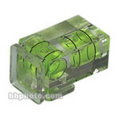
Not all landscape scenes have a flat horizon in the distance. My neighborhood is full of diagonal ridges. I could not take landscape scenes without . A variety for sale at B&H. I try to avoid, like the plague, doing a minor degree rotation in post-processing. A 90 degree or 180 degree rotation is not a problem, but a 2 degree rotation will cause the sharpness and detail to degrade because the image is resampled. Always best to get the image level at the time of image capture.
[quote=Yo_Spiff] I had a "Duh" moment yesterday while I was out shooting landscapes, twisting and contorting my fat butt into all sorts of positions trying to get the perspective I wanted. When I do this, I often end up with seriously tilted horizons and then lose a lot of my image area and composition choices to correcting the tilt. I finally realized I could use two of the focus points in my viewfinder as a level. Might be obvious to many, but I suspect some others like myself had not noticed the focus points could be used this way.
That is so strange, I started trying the same technique yesterday. I have no right angle view and the camera was super low. Yeah, it did help. Also you can try a shot, then shift the camera, slightly to one horizon. Then continue for a few shots, shifting and shooting. I find this can be great with wide angle lenses. You usually get one that is perfect!
Funny, I was reading all this thread and wondered why people didn't just use the grid in the viewfinder. Guess I did not realise the older Canons didn't have that feature. Learn something new everyday.
Not all landscape scenes have a flat horizon in the distance. My neighborhood is full of diagonal ridges. I could not take landscape scenes without . A variety for sale at B&H. I try to avoid, like the plague, doing a minor degree rotation in post-processing. A 90 degree or 180 degree rotation is not a problem, but a 2 degree rotation will cause the sharpness and detail to degrade because the image is resampled. Always best to get the image level at the time of image capture.
I have levels on all 3 planes of my tripod head, which is ideal for what you're describing. The grid, however, is still good, because even IF a scene, when squared up, shows natural diagonals, it's frequently the case that this makes it look tilted when viewed, and it's often best to square away that natural diagonal.
But that's really the difference between where you shoot (mountains) and where I shoot (low seashores and marshes); my "diagonal deviations are very minor, yours is totally major :-)
I have levels on all 3 planes of my tripod head, which is ideal for what you're describing. The grid, however, is still good, because even IF a scene, when squared up, shows natural diagonals, it's frequently the case that this makes it look tilted when viewed, and it's often best to square away that natural diagonal.
I don't have a grid in the viewfinder, though I suppose there are replacement focus screens for that. I was also shooting handheld.
I have levels on all 3 planes of my tripod head, which is ideal for what you're describing. The grid, however, is still good, because even IF a scene, when squared up, shows natural diagonals, it's frequently the case that this makes it look tilted when viewed, and it's often best to square away that natural diagonal.
I don't have a grid in the viewfinder, though I suppose there are replacement focus screens for that. I was also shooting handheld.
I installed that focusing screen in my 50D. It's the EF-D, and it definitely is handy. Installing it only took about 3 minutes. However, your focus points suggestion is still really good for those times when you cannot see the grid lines on the focusing screen.
Since I only have 6 MP, I have to use every last pixel, meaning straight horizon AND proper composition (i.e. horizon not in center). Since my viewfinder has three brackety things right down the middle, your technique doesn't quite work for me, as I'll tend to point them quite a bit higher than the horizon.
I had a "Duh" moment yesterday while I was out shooting landscapes, twisting and contorting my fat butt into all sorts of positions trying to get the perspective I wanted. When I do this, I often end up with seriously tilted horizons and then lose a lot of my image area and composition choices to correcting the tilt. I finally realized I could use two of the focus points in my viewfinder as a level. Might be obvious to many, but I suspect some others like myself had not noticed the focus points could be used this way.
It took me a while to figure that one out too, although I still sometimes forget.
Don't forget that your 7D has the cool gyro thing [Hit info a couple of times]... which is MUCH better :-) I keep the grid on anyway but it's very nice and let's you pretend to play flight simm when your board (just sayn... I would have NEVER done that ok].