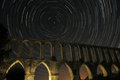
Bear in mind that they are 200x 30 seconds exposures, I don't know how many did you stack.
But it's just so easy to use, just input the images and you're done!
The technique used to composite fireworks, as described in this Tutorial, might work for what you need, if you have a sequence of images you can line up.
I posted a thread here about a week or so ago about this stuff :)
I've learned a little more since then, and I'll share what I know.
I should say also, that I'm doing real long exposures, not stacking.
So here's what I know:
Stick with apertures between 3 and 6 (Depending on how close your nearest foreground object is)
It's easiest to focus on the moon
Use LENR (Long Exposure Noise Reduction) as it's very, very important, but keep in mind this DOUBLES the time the camera takes to make an exposure, essentially take a photo and then wait an equivalent amount of time for a dark exposure of the same duration..
This eats batteries like I eat Prima Donna cheese
ISO 200-400 seems to work best (100 leaves the sky too bright and the stars too dim, while anything above 400 is WAY too noisy on a 50D, even with LENR)
A heavy tripod is a good thing
Airplanes suck
A thermos of coffee or hot chocolate is a very good friend to take along (oh, a real friend is a good idea too as you'll spend a bunch of time waiting.)
Enjoy.. Oh here are some of my first shots (I'll post more soon, weather is not being cooperative this week)
This is the last shot from the evening, clouds had started to soften everything in the sky
One of the first shots of the evening, should have used a smaller aperture, and the wind gusted a bit after the exposure started so that didn't help one bit either..
Will help, and it also lets you use darks so you dont need to do long exposure noise reduction. Simply shoot a shot once your camera is all warmed up with the lens cap on of the same ISO, and length as you're shooting the sky. This will give the software your camera's noise info.
//deepskystacker.free.fr/ is also a lot of fun, letting you get see more of what's in the sky by stacking frames not intended for star trails. This lets you use dark, flat, dark flat and bias frames to get some really impressive images even at higher ISOs. With the D700 i can safely shoot 3200ISO with almost no noise at the end.
I'll be spending 3 nights shooting the sky over Easter, really looking forward to it!