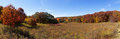
I'm going out this weekend to do some fall photos. I have the canon 17-40 f4 and a 50 f1.4 would it be better to rent a 24-70 2.8 and only use that on my full frame?
Well, the 24-70/2.8 (even the first version) is better in the corners, no doubt. That's especially true since the 24-70 is stopped down one stop more at any give f-stop. But the truth of the matter is, you'll probably be shooting at f/8. At that aperture, you *might* find that there is a small difference, in the extreme corners. The 17-40 is really pretty darn good, stopped down.
Also, FWIW 24mm really isn't all that wide. I went for years with nothing between the 24-70 and the 15mm fisheye, and finally bought a copy of the 17-40 from another DPCer. My plan was to figure out how much I used it, and if I found the range useful, to upgrade to the 16-35. Well, I found it useful, but have never upgraded, and probably will not for some time. I'm pretty satisfied with the 17-40, but I almost never shoot it wide open.
I was curious if the 24 would be wide enough. I plan on shooting some isolated tree shots and leaves wide open which is why ill have my 50. Wasnt sure I wanted to take 2 lenses but neither are very bulky or heavy so I may save the 60 bucks. The only other thing is I believe my nd filters for the 17-40 would work on the 24-70 but they don't fit on my 50mm
I'm going to offer another perspective, based on some similar shooting I did this past weekend.
Use the 50 1.4, and do panoramic stitching. I did this on some photos that I have not yet posted, and it turned out quite fantastic. The latest version of Hugin (open source stitching tool for Mac and Windows) is amazing. I even had some shots that include part of Lake Michigan which was full of waves on a windy day, and the stitches were nice.
Remember, you can also shoot portrait and stitch to get more vertical height, or even do two rows to get nice dimensions.
Of course, these shots cannot be included in challenges (unless expert editing is allowed), but for personal use, panoramic is now my go to tool for landscapes.
...
Remember, you can also shoot portrait and stitch to get more vertical height, or even do two rows to get nice dimensions....
This is a technique I use, too. Not only do you get more vertical height, but one will tend to use a longer lens focal length, which "compresses" distances. It brings the distant mountains closer to the foreground elements. That 55mm lens focal length gives me an image that comes close to a scene like the eye sees.
If I'm relatively close to the subjects in my scene (lakes, rivers, trees), then 24mm is about right for most of my landscapes. However, I've found it interesting that the lens focal length which generates my favorite images is often 28mm. I think that may because zooms (like my 24-105mm f/4L IS USM) tend to fall off in sharpness on both ends of the zoom range. Hence, I tend to like the results from 28mm, which backs off the widest a bit.
May have to do some more panos and may try the brenzier method again. Tried last weekend but I chose a poor subject. One problem is my computer needs more memory as the stitching really taxes the system.
If the objective is to generate really high quality images for large prints, color me in agreement with the pano stitching crowd. In that case, your 50mm is near ideal. Shoot portrait and you've got about 38° vertical coverage with one row, or about 65° with two rows (assuming 30% overlap).
ETA: the best damn thing i've ever stitched with is PTGUI. I've tried others, and always come back. I do need to take a look at CS6, it's on my to-do list. PTGUI started life as a graphical front-end for PanoTools, and can still use PanoTools as a stitching engine, but PTGUI is really a stand-alone product at this point.
Here are two recent panoramic photos I did. Both of them I shot handheld, and stitched in the wonderfully easy to use (and powerful) Hugin. Both were shot with the 50mm 1.4 to give a real life feeling, and the stitching works WAY better than when trying to stitch images taken at a wide angle.
Obviously at higher resolutions they look even better (I uploaded at 1200 px), so if you click to view full size you get to start to see the more intricate details.
Good stuff Mike! Taken on the Ice Age Trail? Really beautiful sky in that second one. And I do agree, a longer focal length lens makes stitching a (relative) breeze!
May have to do some more panos and may try the brenzier method again. Tried last weekend but I chose a poor subject. One problem is my computer needs more memory as the stitching really taxes the system.
You don't really need a ton of memory.
This is probably the best tutorial I've read on panoramic stitching.