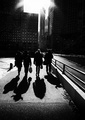
I'd love to see people's shots with the sun directly in the frame and know the exif data to try to get a feel for what proper settings will be like. This doesn't count actual sunsets/sunrises where the sun is right on the horizon but ones where the sun is above the horizon.
I'm working out details for the Bryce Canyon eclipse as much ahead of time as I can.
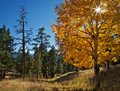
I haven't been around much lately, but sun in frame is something that I play with a lot, being that we have so much of it here... I hope these help. Good luck with the eclipse images, and I look forward to seeing the end result.
I haven't been around much lately, but sun in frame is something that I play with a lot, being that we have so much of it here... I hope these help. Good luck with the eclipse images, and I look forward to seeing the end result.
This one is perfect. I'm looking to try to capture this during the eclipse. My fear is that they will all look like the first ones posted in the thread (ie. pitch black except for a ring of the sun). Any special technique to get the exposure right?
Not really, I just played with the settings, trying to keep the model reasonably sharp, and not blow it out too much, ending up with a fairly high aperture. I probably could have dropped the ISO a bit more, but needed a reasonable SS. I've archived the original, but I seem to recall that I darkened the top half a fair bit with curves, and multiply, and dodge & burn, to make the sun stand out, and pimp the rays.
I think that "best practice" is going to be an HDR-like strategy. I'd shoot all the way from the proper exposure for the scene down to about -6 stops. I would not shoot every stop, perhaps every two stops. Often, you don't really even need to go that close. This shot:
was a combination of two exposures 4 stops apart.
Unfortunately, I don't remember the settings. However, I believe that I kept trying to under expose it to get it right, and it couldn't underexpose enough. So I switched to manual so I could control it. So it was more than 3 stops underexposed.
Eclipse Chasers website There may be some tips here that would be useful.
There is a warning in the Nikon D7000 manual about using "live view" directly into the sun, related to damaging the sensor or tronix. The same may apply to Canon cameras.
I think that "best practice" is going to be an HDR-like strategy. I'd shoot all the way from the proper exposure for the scene down to about -6 stops. I would not shoot every stop, perhaps every two stops. Often, you don't really even need to go that close. This shot:
was a combination of two exposures 4 stops apart.
Yes! This is probably really close to the conditions I will find although the sun will be at 10 degrees and not on the horizon. I'm just praying I can get some detail in e landscape while also being able to create some sort of gradient that doesn't look totally fake in the sky. But don't worry, I'll have a whole four minutes to employ trial and error!
One of the more interesting tips in the website is to set up and shoot video of the activities and sounds/comments if you are with a group of people. I probably would not have thought of that.
I would think you have a few options. One is shooting against an interesting foreground as a silhouette, two is using a hdr technique and third is using a graduated nd filter. Just my thoughts of course. There are a ton of photos online if you use a google search but not sure if many of them give the settings. Good luck though it sounds like an amazing opportunity to witness.
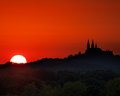
I shot this one a month or so ago. This is a sunrise, but it is about where the position of the sun will be during the eclipse, maybe this is a little higher.
Ill have to get the EXIF data from home.
Fron an equipment perspective, this was taken with the 14-150mm Olympus zoom (28-300mm equiv). I was very please with the lack of lens flare and the detail in the grass.
I agree that either a GND or shooting bracketed would be good.
This was taken at sunrise on the same day as my April FS. This is the tonemapped outcome of a 3 shots bracketed and the frame that was the darkest of the 3. (no GND)
One of the takehome lessons I've noticed is that my composition should include some flat land. It's this part of the landscape that is likely to reflect enough light to bring in some detail. If I only frame the eclipse behind a shoulder of rock, I'm likely to have sillhouette only.
Last night I shot straight into the sun with my 9-stop ND filter and it was quite easy. The exposures were in the range of 1/30th to 1/250th at ISO 100 and an aperture in the 5.6-8.0 range. That gives plenty of support to the idea that I could shoot the eclipse with only 2-4 stops of a polarizer, 2-stop ND filter or even graduated ND filter.
I shot this one a month or so ago. This is a sunrise, but it is about where the position of the sun will be during the eclipse, maybe this is a little higher.
Ill have to get the EXIF data from home.
Fron an equipment perspective, this was taken with the 14-150mm Olympus zoom (28-300mm equiv). I was very please with the lack of lens flare and the detail in the grass.
EXIF Data
ISO 200
Exposure bias -1 EV
F5.6
1/2500 shutter
Focal Length - 90mm (180mm Equiv)
Lens 14-150mm 4.0-5.6 Digital ED m.Zuiko