Curious, just noticed that the best photos of 2009 and 2010 only had average scores of 7.6xx.
What are your thoughts on this. I don't mean to imply that 7.6 is not a good score, but rather what does this say about our voting that the best picture out of hundreds of challenges and tens of thousands of submissions is a 7.6?
What would it take to get an 8.0? Are we judging too harshly maybe?
What would it take to get an 8.0? Are we judging too harshly maybe?
Just opening this up for discussion..
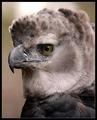
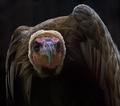
Actually, in only one year, 2005, did a free study entry score an 8+, and that was Imagineer's incredible vulture shot, easily one of the most striking images ever posted to DPC.
You have to understand that it's much harder to score really well in a Free Study, and the reason why is simple: where there is no theme, no specific challenge, wildly disparate sorts of images are competing together in the same pool. The "portrait people" don't score landscapes as high, the "landscape people" don't score portraits as high (I'm painting with a broad brush here) and in general there are so many examples of each genre that the top places get watered down a bit, score-wise.
By contrast, the same landscape, in a landscape challenge, might score half a point or more higher, because it would be competing against other landscapes, see?
What would it take to get an 8.0? Are we judging too harshly maybe?
Just opening this up for discussion..
Actually, in only one year, 2005, did a free study entry score an 8+, and that was Imagineer's incredible vulture shot, easily one of the most striking images ever posted to DPC.
You have to understand that it's much harder to score really well in a Free Study, and the reason why is simple: where there is no theme, no specific challenge, wildly disparate sorts of images are competing together in the same pool. The "portrait people" don't score landscapes as high, the "landscape people" don't score portraits as high (I'm painting with a broad brush here) and in general there are so many examples of each genre that the top places get watered down a bit, score-wise.
By contrast, the same landscape, in a landscape challenge, might score half a point or more higher, because it would be competing against other landscapes, see?
Or that's what I think, anyway...
R.
I understand your argument, but I would think (maybe naively) that the freedom to shoot whatever you want, however you want, should lead to a much higher quality "product" since there is no restriction in place to limit the photographer. Surely this should lead to better picture with better scores?
What would it take to get an 8.0? Are we judging too harshly maybe?
Just opening this up for discussion..
Actually, in only one year, 2005, did a free study entry score an 8+, and that was Imagineer's incredible vulture shot, easily one of the most striking images ever posted to DPC.
You have to understand that it's much harder to score really well in a Free Study, and the reason why is simple: where there is no theme, no specific challenge, wildly disparate sorts of images are competing together in the same pool. The "portrait people" don't score landscapes as high, the "landscape people" don't score portraits as high (I'm painting with a broad brush here) and in general there are so many examples of each genre that the top places get watered down a bit, score-wise.
By contrast, the same landscape, in a landscape challenge, might score half a point or more higher, because it would be competing against other landscapes, see?
Or that's what I think, anyway...
R.
I understand your argument, but I would think (maybe naively) that the freedom to shoot whatever you want, however you want, should lead to a much higher quality "product" since there is no restriction in place to limit the photographer. Surely this should lead to better picture with better scores?
Perhaps you're looking at this the wrong way. Generally speaking, in free studies you're judging only the quality of the photography and in theme challenges you're judging topic relevancy first and foremost. In a theme challenge the best photograph rarely wins out. So you can't compare the two types of challenges as far as scores go.
True, since there is no "topic or challenge", then your only goal is to make the best photo you can, since there is no limitation that is normally in place with challenges. So, if your only goal in free study is to take the best possible picture, then the photo's should be of much higher quality?
I understand your (bear_music's) argument, but I would think (maybe naively) that the freedom to shoot whatever you want, however you want, should lead to a much higher quality "product" since there is no restriction in place to limit the photographer. Surely this should lead to better picture with better scores?
Perhaps you're looking at this the wrong way. Generally speaking, in free studies you're judging only the quality of the photography and in theme challenges you're judging topic relevancy first and foremost. In a theme challenge the best photograph rarely wins out.
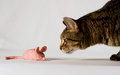
Yanko's touching on the same thing I did, from a different perspective: challenge relevance can drive scores up, and often does. Major case-in-point would be Scalvert: take a look at these:
These both were extremely high-scoring images. All the images on his profile page are extremely high-scoring, actually. And I'm pretty sure Shannon would be the first to agree that, as far as photographic skills go, these images demonstrate a high level of competence and that's about it. The "Wow!" in these images, that gets them the high scores, is on the conceptual end, and the conceptual aspect of them is directly tied in to the challenge theme.
In other words, these images would NOT have scored anywhere near as well in a Free Study, where competent, polished images are rather common, because there's no thematic "hook" to make them stand out. This is what Shannon's best at, arguably one of the 2 or 3 best in the history of DPC: he can come up with a completely creative, visual concept that ties into a theme, then execute it flawlessly.
Free Studies, as stated in my earlier post, are a whole different kettle of fish; and when apples compete head-to-head with oranges, the citrus lovers and the drupe lovers will drive each others' scores down a bit as they make their preferences known.
I understand your (bear_music's) argument, but I would think (maybe naively) that the freedom to shoot whatever you want, however you want, should lead to a much higher quality "product" since there is no restriction in place to limit the photographer. Surely this should lead to better picture with better scores?
Perhaps you're looking at this the wrong way. Generally speaking, in free studies you're judging only the quality of the photography and in theme challenges you're judging topic relevancy first and foremost. In a theme challenge the best photograph rarely wins out.
Yanko's touching on the same thing I did, from a different perspective: challenge relevance can drive scores up, and often does. Major case-in-point would be Scalvert: take a look at these:
These both were extremely high-scoring images. All the images on his profile page are extremely high-scoring, actually. And I'm pretty sure Shannon would be the first to agree that, as far as photographic skills go, these images demonstrate a high level of competence and that's about it. The "Wow!" in these images, that gets them the high scores, is on the conceptual end, and the conceptual aspect of them is directly tied in to the challenge theme.
In other words, these images would NOT have scored anywhere near as well in a Free Study, where competent, polished images are rather common, because there's no thematic "hook" to make them stand out. This is what Shannon's best at, arguably one of the 2 or 3 best in the history of DPC: he can come up with a completely creative, visual concept that ties into a theme, then execute it flawlessly.
Free Studies, as stated in my earlier post, are a whole different kettle of fish; and when apples compete head-to-head with oranges, the citrus lovers and the drupe lovers will drive each others' scores down a bit as they make their preferences known.
R.
Robert, let me paraphrase and see if I'm understanding you. What're you're saying is that when there is a challenge, we (the voters) may give a point or two more for a picture because it met the challenge perfectly and was expertly done. However, if the same picture was taken in Free Study, that same picture would tend to score lower since the added points for meeting challenge would not apply. The photo would then solely be graded according to photographic technique.
So without a topic or challenge in mind, it is harder to score the sort of numbers since technique and execution are the sole points of reference?
Robert, let me paraphrase and see if I'm understanding you. What're you're saying is that when there is a challenge, we (the voters) may give a point or two more for a picture because it met the challenge perfectly and was expertly done. However, if the same picture was taken in Free Study, that same picture would tend to score lower since the added points for meeting challenge would not apply. The photo would then solely be graded according to photographic technique.
So without a topic or challenge in mind, it is harder to score the sort of numbers since technique and execution are the sole points of reference?
That's half of what I'm saying. The other half is, in a themed challenge the voters tend to be a little more *directed* towards certain styles or approaches. The obvious examples are portrait challenges and landscape challenges, where neither of these genres competes with the other, but the concept extends more subtly through ANY themed challenge, where images that don't meet many voters' preconceptions fare poorly regardless of their quality.
In a Free Study, all the genres compete, and, since each has its champions, the highest votes get spread a little thinner, and consequently the winning scores are a little lower.
These both were extremely high-scoring images. All the images on his profile page are extremely high-scoring, actually. And I'm pretty sure Shannon would be the first to agree that, as far as photographic skills go, these images demonstrate a high level of competence and that's about it. The "Wow!" in these images, that gets them the high scores, is on the conceptual end, and the conceptual aspect of them is directly tied in to the challenge theme.
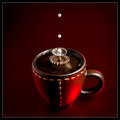
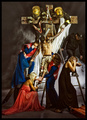
I guess this is where I mention that Shannon hasn't won a free study ribbon yet. :P Since we're on the subject, I had a look at De Sousa and gyaban to see how well they have done in free studies. Neither enters much but both have one free study ribbon a piece.
In Gyaban's photo there's an obvious in-camera technique the voters responded to. However, De Sousa's is much like Shannon's in that the camera is just being used to document what was already setup in front of the camera. That said, De Sousa's was far more complicated in setup which probably had a big impact on the voters. He also has smoke in the shot. Having smoke or mist in any photo probably adds about .5+ to your score. Just don't tell the stemware/kitchware photographers that. :P