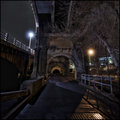
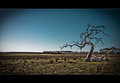
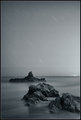
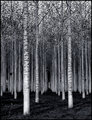
My FA entry got knocked back too after a few days in screening. Impact and Motif.
I'm not sure it would have sat so comfortably on the page there... One of the things that seems to be important for getting published there is for an image to create a sense of depth (as in Z axis) - mine didn't have that.
My FA entry got knocked back too after a few days in screening. Impact and Motif.
I'm not sure it would have sat so comfortably on the page there... One of the things that seems to be important for getting published there is for an image to create a sense of depth (as in Z axis) - mine didn't have that.
It's a fancy term for showing depth in an image through use of fore, middle, and back-ground elements. It's primarily a cinematographic term.
The Z-Axis
Although a film is technically a two-dimensional (2D) image on a screen, part of an audience’s suspension of disbelief relies on your ability to appeal to their subconscious and make them think they’re looking at a 3D reality.
What I mean by that is, if they’re looking at an image that resembles something they might see in real life, they’ll be more likely to submit themselves mentally to what you’re putting in front of them.
When we speak about the layers of film composition available in an image, we’re talking about the appearance of depth - how far away things appear to be, or what we call the Z-axis. Home videos and indie filmmaking projects shot on video have a tendency to be really flat; they don’t have a lot of z-axis depth (because of the way video cameras work. More on that here).
To separate our general layers along the Z-axis, we use the terms foreground, middleground, and background. Lighting, depth of field (which is explained in three-point lighting setup is used to illuminate half of a person’s face slightly brighter than the other half, it gives the person three-dimensional qualities.
It's a fancy term for showing depth in an image through use of fore, middle, and back-ground elements. It's primarily a cinematographic term.
The Z-Axis
Although a film is technically a two-dimensional (2D) image on a screen, part of an audience’s suspension of disbelief relies on your ability to appeal to their subconscious and make them think they’re looking at a 3D reality.
What I mean by that is, if they’re looking at an image that resembles something they might see in real life, they’ll be more likely to submit themselves mentally to what you’re putting in front of them.
When we speak about the layers of film composition available in an image, we’re talking about the appearance of depth - how far away things appear to be, or what we call the Z-axis. Home videos and indie filmmaking projects shot on video have a tendency to be really flat; they don’t have a lot of z-axis depth (because of the way video cameras work. More on that here).
To separate our general layers along the Z-axis, we use the terms foreground, middleground, and background. Lighting, depth of field (which is explained in three-point lighting setup is used to illuminate half of a person’s face slightly brighter than the other half, it gives the person three-dimensional qualities.
my FA challenge outtake
got through the 1x filter
link I was rather surprised, did not think it had much potential over there as well as here. Maybe that's what I should've submitted here too, who knows?... :)
I can't remember my username at 1x and have tried the forgotten password thingy a few times. It accepts my email address but it doesn't seem to work as I don't receive any emails. I have checked my junk mail and its filter settings etc. and mail at my provider. Has anyone else encountered this?
my FA challenge outtake
got through the 1x filter
link I was rather surprised, did not think it had much potential over there as well as here. Maybe that's what I should've submitted here too, who knows?... :)
I preferred that version as well. I like the layout of the glass better. It's certainly more abstract but I think it just boils down to the fact that you included all of the aspects of the face. The nose and mouth were missing in the DPC entry version.
Thought I would share this here. I have had many rejects over at 1x....but also have had my fair share of published images. I believe the quality on that site is incredible. Well, I am not the only one who thinks so. I just received an e-mail from National Geographic regarding one of my images they would like to publish in a childrens book. The editor told me that he and his staff like to "spend hours looking at all the great photographs on 1x". How awesome is that. They frequent the site often and find the work inspiring. So there is hope for us all. Keep submitting those images....and keep trying even if you get rejected.
That is so awesome, Jennifer! And I had someone contact me who wanted to use a photo that they saw on 1x for a year on a T.V. ad in France for 500 pounds. Maybe I should thicken up my skin and try again.
I pretty much figure I'll never be published over there. My work just isn't their style....
Think eye candy but in a sophisticated way, not in a DPC way. Here eye candy is mostly fabricated but on 1x their eye candy is natural, if you like. It's more about things that are found in every day life than made up ideas in a studio. That's my take on that site.
Think eye candy but in a sophisticated way, not in a DPC way. Here eye candy is mostly fabricated but on 1x their eye candy is natural, if you like. It's more about things that are found in every day life than made up ideas in a studio. That's my take on that site.
I agree with your first statement, but not so much with the second one. There are lots and lots of staged shots on 1x, they are just well done for the most part. Come to think about it, actually (almost) any piece of art is an eye candy, just not for any eye :).