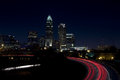
One thing that you might want to mention (and I see in all the example photos) is that the best time to shoot night photography is often really in twilight. When the sky is a deep, dark blue and not totally dark.
Also, there's a full moon coming in about a week - a great time for night photography!
The light in the sky that you see is not twilight, it is light polution or moonlight depending on the shot.
None of my night photo´s are done in twilight...
The light in the sky that you see is not twilight, it is light polution or moonlight depending on the shot.
None of my night photo´s are done in twilight...
Just had to let that know ;)
Serves me right for just looking at thumbnails. Anyway - you should try shooting at twilight - often the sky is a real interesting colour!
Fantastic! One of the best tutorials I've read here. Not only for the excellent info (like the ISO/shutter table), but for your great, lightly comic tone.
Bulb mode is one of the reasons on my list of why to buy a DSLR. But I've managed to get some decent night shots even with my current camera, including my best score. :)
How long did you shine the flashlight on the grass in that one photo? Did you wave it around to illuminate everything (including the lilly pad)?
Yep, I waved it around, also on the lilly pad, and I think some 10 seconds on the weed, and 5 (less waving) on the pad. It's a trail and error kind of thing, but you have (almost) instant feedback
It is a mode in your camera where the shutter remains open as long as you keep the button pressed. Your camera has a bulb mode for as long as 30 seconds, some other cameras will keep the shutter open for several minutes!
It is a mode in your camera where the shutter remains open as long as you keep the button pressed. Your camera has a bulb mode for as long as 30 seconds, some other cameras will keep the shutter open for several minutes!
I'm a newby to this, and am a bit confused. You talk about BULB and I'm not sure what you mean. Could you expand on BULB?
Thanks,
Grant.
P.S. Guess I should read the other posts. Somebody else has asked the same question and you've answered it.
Little late reply, but yes:
It is a mode in your camera where the shutter remains open as long as you keep the button pressed. Your camera has a bulb mode for as long as 30 seconds, some other cameras will keep the shutter open for several minutes!
Thanks for the tutorial... it was easy to read and follow. I have always taken snapshots, but I'm new to expanding my world of photography. I tried out this tutorial last night and the following is what I think is the best of the bunch. The only thing I did post shot was a crop and I upped the contrast. I'm still learning all the post shot processing. :-)
Oh and a helpful hint I learned last night... just because that dock is nice and low to the water does not make for a good place for a tripod. LOL
Philos, excellent tutorial, I had already found a lot of this by trial and error, especially the aperture closing to get the star effect. Thanks for the equations though, I usually just try to bracket my shots and go with the one I like best. Good work!
Here is a trick I learned during some astrophotography shots.
Older and cheaper camera don't have a mirror lock. This means that there could be some camera shake. You can get around this by putting a dark panel in front of the lens when the shutter is pressed, and replace it just momemnts before release.
Here's my nightscape shot (67 seconds exposure), complete with the small aperture star effect.
Manual/Bulb mode; 67 seconds at f/22, ISO 100, focal length: 41mm, tripod with IS turned off, mirror lock-up, wireless remote shutter release, graduated ND filter set to only cover the top 1/4 of the composition to avoid over exposing the lights on top of the tallest building.